For a creative business, a website is never just a place to list services and contact information. It is part of the brand itself.
When a potential client visits the website of a graphic designer, branding studio, photographer, illustrator, packaging designer, UI specialist, or creative agency, they are not only reading the text. They are judging the visual experience. They notice the layout, color palette, typography, image quality, spacing, project presentation, and overall style. Before they send a message or request a quote, they are already asking themselves whether this brand feels professional, original, and trustworthy.
That is why the choice of website builder matters.
A simple business website can survive with a basic template. But a creative business usually needs more than that. It needs a website that can show personality, display portfolio work beautifully, support storytelling, and create a strong first impression.
Two popular website builders that small businesses may consider are Wix and uKit. They both help businesses create websites without building everything from scratch, but they serve different needs.
Wix is the stronger and more complete solution for most creative businesses. It offers more design flexibility, more features, more room for growth, and better tools for building a visually expressive brand presence online.
uKit, on the other hand, is a more niche and practical tool. It is not as powerful or flexible as Wix, but it can be a good option for small businesses that need a clean, affordable, straightforward website without complex functionality.
The right choice depends on what your website needs to do. But if your business depends on visual trust, presentation, and brand personality, Wix usually has the advantage.
Why Website Builders Matter for Designers and Creative Brands
Website builders are not just technical tools. They shape how a brand is presented.
For creative businesses, presentation is part of the product. A designer’s website should show taste. A branding studio’s website should feel branded. A photographer’s website should make images feel intentional. A packaging designer’s website should make projects look polished and commercial. A UI designer’s website should feel clean, modern, and easy to navigate.
The wrong platform can make good work look ordinary. The right platform can help the same work feel premium.
A creative business website often needs a strong homepage, a visually engaging portfolio, individual project pages, clear service descriptions, client testimonials, a contact or inquiry form, blog or editorial content, and enough design control to make the site feel unique.
This is where the difference between Wix and uKit becomes important. Both platforms can help you get online, but they do not offer the same creative possibilities.
For a business that only needs a simple online presence, uKit may be enough. But for a creative brand that wants to stand out, build authority, and present work in a memorable way, Wix is usually the better fit.
Wix: The Stronger Choice for Creative Freedom
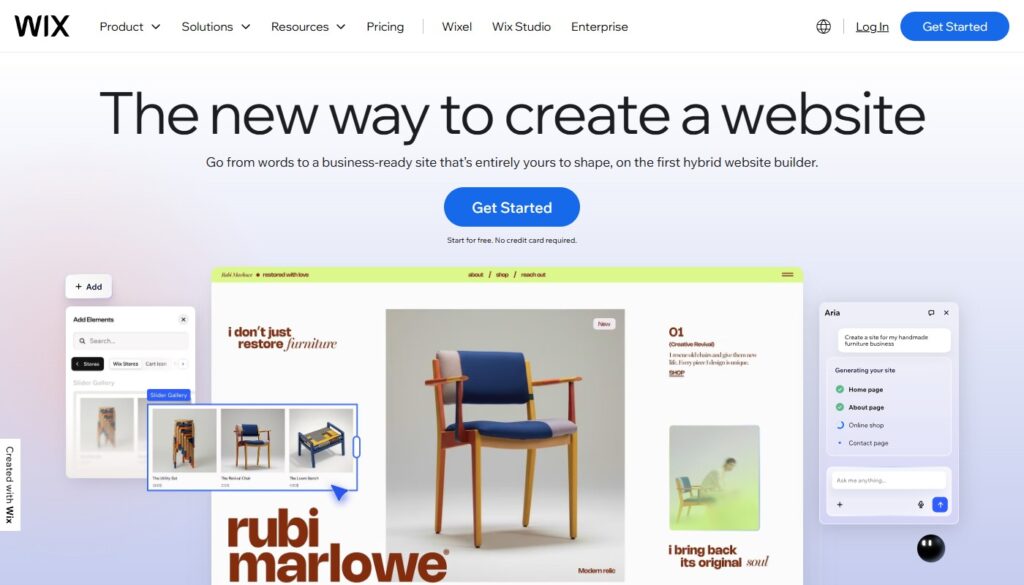
Wix is one of the strongest website builders on the market for creative businesses because it gives owners and designers more freedom to shape the visual experience.
A creative website needs flexibility. It should not feel like every other site using the same template. It should be possible to adjust layouts, create distinctive sections, use strong imagery, build custom project pages, and control the way a visitor experiences the brand.
Wix is especially useful because it gives creative businesses more space to experiment with design. You can create a clean minimal portfolio, a bold agency-style website, a colorful brand showcase, a stylish restaurant page, a personal creative profile, or a more complex service-based site.
This matters because different creative businesses need different moods. A luxury packaging designer may need elegance and restraint. A streetwear brand may need energy and contrast. A UX consultant may need clarity and structure. A graphic studio may need a mix of personality and professionalism.
Wix gives more room to express those differences.
For businesses where visual identity is central, this flexibility is not just a nice feature. It is part of the brand strategy.
Why Wix Works Especially Well for Portfolios
A portfolio is not just a gallery of images. It is proof of skill, taste, process, and results.
For a creative business, the portfolio is often the most important part of the website. Potential clients want to see what kind of work you do, how polished it looks, whether your style matches their needs, and whether you can solve real design problems.
Wix works especially well for portfolios because it gives creative professionals more ways to present their work. Projects can be shown through galleries, case study pages, image grids, full-width visuals, written descriptions, testimonials, and calls to action.
Instead of simply uploading a few images, a designer can build a story around each project. A strong project page can explain what the client needed, what visual direction was chosen, what design problem was solved, what deliverables were created, and how the final result supported the brand.
This kind of presentation is especially useful for graphic design, branding, UI design, packaging, editorial work, photography, interior design, and other visual services.
A strong portfolio does not only show what something looks like. It explains why the work matters. Wix gives more flexibility to build that kind of experience.
Wix as an All-in-One Platform for Growing Brands
Another major advantage of Wix is that it is not only a page builder. It is closer to an all-in-one platform for small businesses and growing brands.
A creative business may start with a simple portfolio, but over time it may need more. It may want to publish blog posts, collect leads, offer online booking, sell digital products, add an online store, connect marketing tools, improve SEO, or create landing pages for specific services.
Wix gives businesses more room to grow without immediately moving to another platform.
This is especially valuable for creative professionals who want their website to become more than a static portfolio. A designer may want to publish articles about branding. A studio may want to create landing pages for logo design, packaging, or UI services. A photographer may want booking functionality. A small brand may want to add e-commerce. A consultant may want lead capture forms and email marketing integrations.
With Wix, those possibilities are easier to expand into.
This is one of the reasons Wix is often the better long-term choice. It gives a creative business more tools in one place and more freedom to develop the site as the brand grows.
uKit: A Practical Niche Tool for Small Business Websites
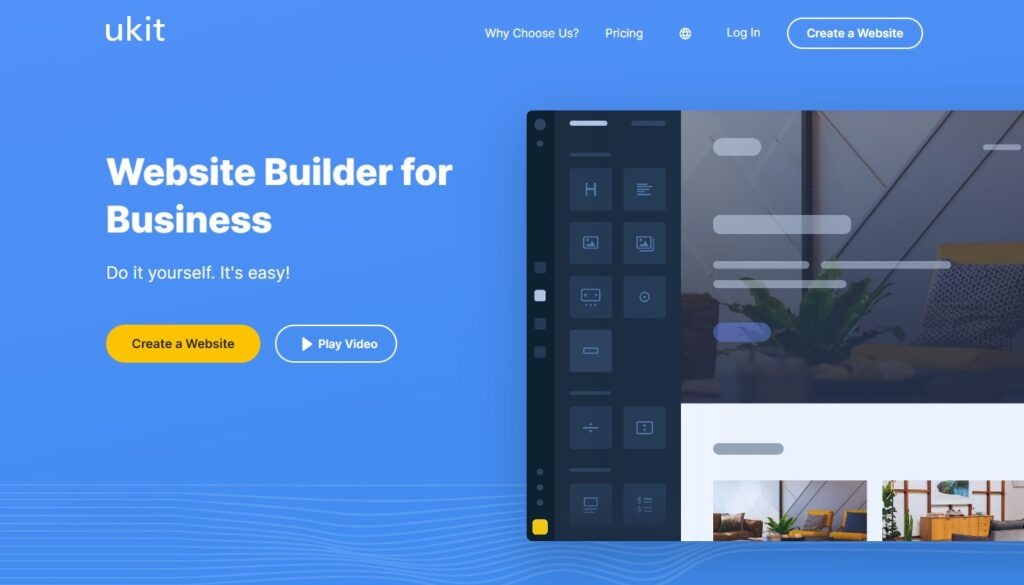
uKit has a different role.
It is not trying to be a massive all-in-one creative platform like Wix. Its strength is simplicity, affordability, and a clear business-focused structure.
For many small businesses, that is enough.
Not every company needs advanced design flexibility, complex animations, deep integrations, online booking, a large blog, or a highly customized portfolio. Some businesses simply need a clean website that explains what they do, shows a few examples, builds basic trust, and makes it easy for customers to get in touch.
For that type of need, uKit can be a practical choice.
It works well for businesses that want a straightforward structure with a homepage, service pages, an about section, a small portfolio, testimonials, and contact information. It can help a company create a professional online presence without getting lost in too many features or design decisions.
uKit may not offer the same creative freedom as Wix, but that can also be part of its appeal. For a small business with a limited budget and simple goals, fewer options can mean a faster launch and easier management.
In other words, uKit is not the best choice for every creative brand, but it can be a reasonable tool for businesses that need something simple, affordable, and functional.
When uKit May Be Enough
uKit may be enough when the website’s main job is clear and limited.
For example, a local service provider may need a website that explains services, shows customer reviews, lists contact details, and includes a request form. A small contractor may need a clean site with project photos and service areas. A consultant may need a simple professional profile with a contact form. A local studio may need a basic portfolio and a short description of services.
In these cases, the business may not need the full creative power of Wix.
uKit can work well for local service businesses, repair and maintenance companies, construction-related businesses, independent consultants, small professional services, simple landing pages, basic portfolio websites, and businesses that need to launch quickly on a smaller budget.
The key is to understand expectations. uKit is not the platform to choose if the website must feel highly custom, visually rich, or scalable in many directions. But if the goal is a clean, practical business website, uKit can do the job.
For some businesses, “simple and clear” is better than “big and complex.”
Visual Branding: Where Wix Has the Advantage
For creative businesses, visual branding is not decoration. It is communication.
Color, typography, spacing, image style, layout, and motion all shape how people feel about a brand. A website can make a business feel premium, playful, elegant, bold, technical, artistic, or trustworthy before the visitor reads a single paragraph.
This is where Wix has the advantage.
Because Wix gives more control over design, it allows a creative business to build a website that feels closer to a custom brand experience. A designer can create stronger visual hierarchy, more distinctive sections, richer portfolio layouts, and a more memorable overall look.
That matters for anyone selling visual work.
If a graphic design studio has a weak website, potential clients may question the quality of the studio’s design thinking. If a branding expert has a generic-looking site, the brand promise becomes less convincing. If a UI designer’s website feels outdated or hard to navigate, the portfolio loses power.
Wix makes it easier to align the website with the brand identity.
uKit can still create a clean and professional site, but it is better suited for standard business presentation. Wix is better when the website needs to feel custom, expressive, and memorable.
Cost vs Creative Control
The choice between Wix and uKit often comes down to a simple tradeoff: cost versus creative control.
Wix may cost more, especially when a business uses advanced features, apps, booking tools, e-commerce, or premium plans. But it also offers more design flexibility, more functionality, and more room for growth.
For a creative business, that extra control can be worth it. A website is often one of the main places where potential clients judge the quality of the work. If the site helps attract better clients, present projects more professionally, and support long-term growth, the investment makes sense.
uKit is usually the more budget-friendly and simpler option. It can be a smart choice when the business does not need a complex website and mainly wants a clear, professional online presence.
The question is not only “Which platform is cheaper?” The better question is: “How important is the website to the way this brand is perceived?”
If the website is just a basic information page, uKit may be enough. If the website is a major part of the brand experience, Wix is usually the stronger choice.
Which Platform Should a Creative Business Choose?
For most creative businesses, Wix is the better choice.
Wix is the right option when a business needs a visually strong website, a polished portfolio, flexible layouts, a blog, online booking, e-commerce, landing pages, marketing tools, or room to grow. It is especially suitable when the website needs to show not only what the business does, but how the brand thinks, feels, and communicates.
Wix is a strong fit for graphic designers, branding studios, photographers, illustrators, UI/UX designers, creative agencies, restaurants, fashion brands, beauty businesses, consultants, and other businesses where visual presentation matters.
uKit is a better option when a business needs a simpler and more affordable website with basic pages, clear service information, testimonials, a small portfolio, and a contact form. It is useful when the site’s purpose is straightforward and the business does not need advanced creative control or a large feature set.
uKit can work well for local service companies, small firms, independent professionals, contractors, repair businesses, and businesses that want to launch quickly without building a complex digital presence.
The simplest way to decide is this: if your website needs to impress visually and grow with your brand, Wix is the better choice. If your website needs to be clean, simple, affordable, and practical, uKit may be enough.
Conclusion: The Best Website Builder Depends on the Brand You Want to Show
A website builder is more than a technical choice. It shapes how your brand appears online.
For creative businesses, that matters deeply. A website can make your work feel premium, organized, trustworthy, and memorable, or it can make strong work feel ordinary.
Wix is the stronger solution for most creative businesses because it offers more freedom, more features, and more room to build a distinctive brand experience. It is especially valuable for portfolios, studios, designers, and growing brands that need their website to do more than simply exist.
uKit is a useful alternative for businesses that need something simpler. It is not as powerful as Wix, but it is affordable, practical, and suitable for clear business websites with basic needs.
The best choice depends on the role your website plays in your brand. If your website is central to how clients judge your work, Wix is usually the better investment. If you only need a simple site that explains your services and helps people contact you, uKit can be a smart niche option.
In the end, the platform matters, but design strategy matters even more. A great website is not created by tools alone. It comes from clear branding, strong visuals, thoughtful structure, and a deep understanding of what your audience needs to see before they trust you.